Understanding the Role of a Cabinet Maker Near Me
When it comes to home design and renovation, the expertise of a cabinet maker near me can elevate your project from mere practicality to an artistic expression of your space. A cabinet maker doesn’t just assemble components; they create customized solutions tailored to the unique needs of your home. In this article, we will delve into the multifaceted role of cabinet makers, helping you understand their services, benefits, skills, and much more.
What Services Does a Cabinet Maker Provide?
A cabinet maker offers a variety of services aimed at maximizing functionality and aesthetics within your home. These services often include:
- Custom Cabinet Design: Collaborating with clients to create bespoke cabinets that fit their specific needs and space.
- Manufacturing: Constructing cabinets from scratch using high-quality materials.
- Installation: Safely and professionally installing cabinets to ensure optimal use of space.
- Repairs and Refurbishments: Updating or repairing existing cabinetry to renew their look and functionality.
- Consultation: Providing expert advice on materials, styles, and layouts that complement your home decor.
Benefits of Hiring a Local Cabinet Maker
Choosing a local cabinet maker comes with numerous benefits, making it a smart investment for homeowners. Here are some key advantages:
- Proximity: Being nearby allows for easier communication and collaboration throughout the project.
- Understanding Local Trends: Local cabinet makers are often in tune with regional design preferences and styles.
- Support Local Economies: Hiring local talent helps boost your community’s economy.
- Timeliness: Proximity can lead to quicker project turnaround times and more flexible scheduling.
Key Skills of a Professional Cabinet Maker
A cabinet maker’s success hinges on a variety of skills that combine technical knowledge with artistry. Essential skills include:
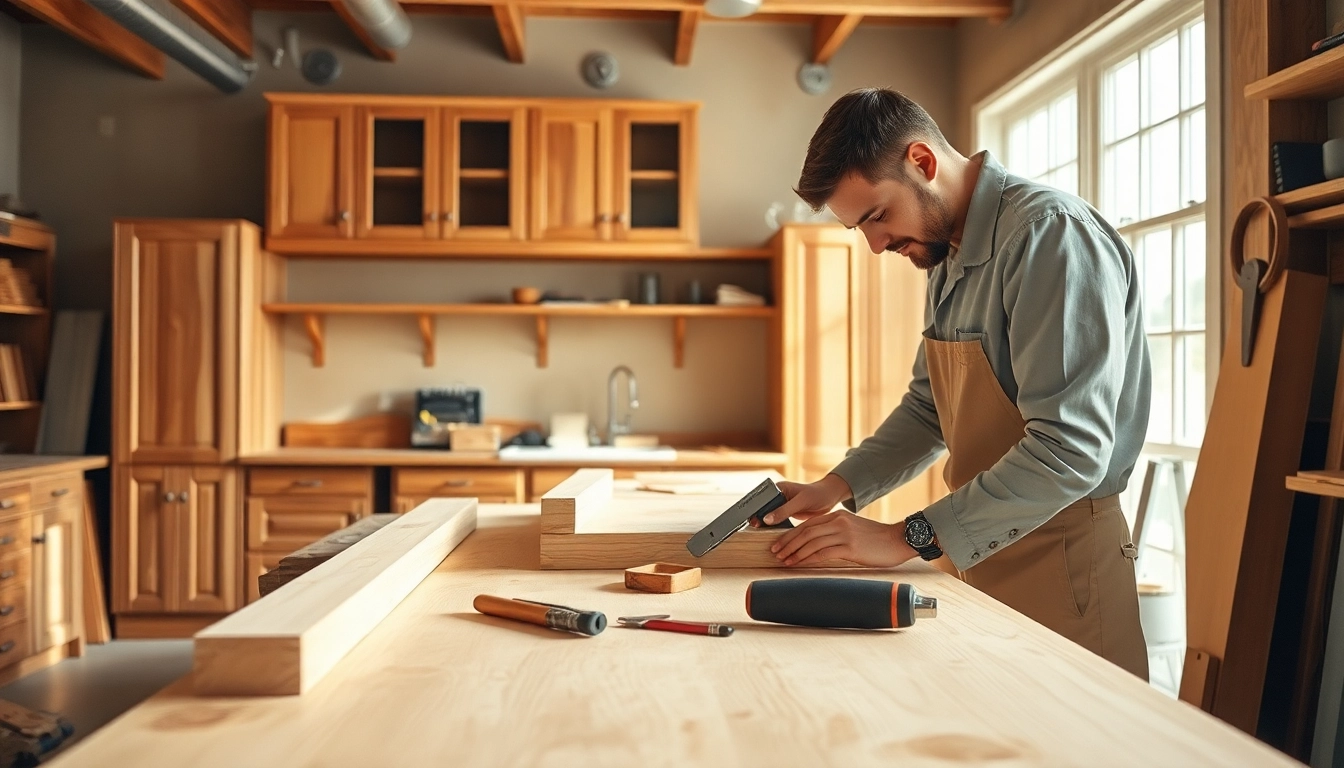
- Woodworking Skills: Proficient in using various tools and machines to cut, shape, and assemble wood.
- Design Skills: Ability to visualize and create design plans that meet client specifications.
- Attention to Detail: Ensuring precision in measurements and finish, which is critical for quality cabinetry.
- Problem Solving: The capability to address challenges that arise during fabrication or installation.
How to Choose the Right Cabinet Maker Near Me
Selecting the right cabinet maker can be daunting, given the various choices available. To help streamline the process, here are some steps to consider:
Evaluating Experience and Portfolio
Experience is a crucial factor when choosing a cabinet maker. Review their portfolio to assess the quality of work, style preferences, and versatility. A strong portfolio should include:
- Before and after photos of projects.
- Variety in styles and designs (e.g., modern, traditional, minimalist).
- Testimonial highlights that speak to craftsmanship and customer satisfaction.
Checking References and Reviews
Don’t hesitate to request references or check online reviews. Speaking directly to previous clients can provide insight into their experiences. Look for feedback on:
- Quality of the workmanship.
- Reliability and professionalism of the cabinet maker.
- Post-installation support and warranty adherence.
Assessing Customer Service and Communication
Good communication between you and your cabinet maker is key to ensuring that your vision is realized. Assess how responsive and approachable they are during your initial interactions. Key indicators of effective communication include:
- Willingness to answer questions and offer guidance.
- Transparency about pricing and timelines.
- Ability to provide a detailed project plan or timeline.
Common Materials Used by Cabinet Makers
The choice of materials significantly impacts both the durability and aesthetic quality of cabinets. A cabinet maker typically works with both traditional and modern materials.
Types of Wood for Cabinets
Wood remains a favored choice for cabinetry due to its natural beauty and robustness. Common types include:
- Oak: Strong and durable, featuring beautiful grain patterns, perfect for traditional styles.
- Maple: A versatile wood with a fine grain, often used for a modern and clean look.
- Cherry: Known for its rich color, which deepens over time, adding depth to cabinetry.
Alternative Materials: Pros and Cons
In addition to wood, several alternative materials are gaining popularity. These include:
- Plywood: Cost-effective and stable but may lack the aesthetic appeal of solid wood.
- Medium Density Fiberboard (MDF): Ideal for painted finishes due to its smooth surface, but can be less durable than solid wood.
- Laminate: Offers a wide range of colors and patterns, but may not have the longevity of wood products.
Understanding Finishes and Textures
The finish of your cabinets allows you to express personal style while protecting the material from wear and tear. Key considerations include:
- Stains: Enhance natural wood beauty without obscuring the grain.
- Paint: Provides a uniform color and can hide imperfections in lower-quality wood.
- Varnishes and Seals: Offer protection against moisture and scratches but can alter the wood’s appearance.
Design Considerations When Working with a Cabinet Maker Near Me
Designing custom cabinets requires thoughtful planning and creativity. Here are important design considerations to keep in mind:
Custom vs. Pre-Made Cabinets
Choosing between custom and pre-made cabinets can significantly affect your project. Understand the pros and cons of each option:
- Custom Cabinets: Tailored to fit specific spaces and requirements, providing ultimate style flexibility.
- Pre-Made Cabinets: Generally more affordable and available for quick installation, but may not fit unusual spaces perfectly.
Incorporating Style into Your Cabinet Design
Cabinets occupy large visual areas in a home, so their style is crucial. Explore elements such as:
- Color Schemes: Coordinate colors with the overall decor for a cohesive look.
- Hardware Selection: Choose knobs and pulls that reflect personal style, from sleek modern to ornate traditional.
- Open vs. Closed Storage: Decide between open shelving for display or closed cabinetry for a cleaner look.
Maximizing Space and Functionality
Effective cabinetry can greatly enhance both space usability and storage capacity. Tips for maximizing this include:
- Vertical Space: Use tall cabinets to utilize space from floor to ceiling.
- Adjustable Shelves: Allow flexibility to arrange according to specific needs.
- Pull-Outs: Incorporate pull-out shelves and drawers for easy access to items stored deep within cabinets.
Frequently Asked Questions About Cabinet Makers
What is the average cost of hiring a cabinet maker near me?
The average cost for custom cabinetry can vary widely based on complexity, materials, and size. Typically, budgets range from $1,000 to $5,000 for small to medium projects.
How long does it take to complete a custom cabinet project?
The timeline for a custom cabinet project generally ranges from 4 to 8 weeks, depending on the complexity and the cabinet maker’s workload.
Can a cabinet maker help with installation?
Yes, most cabinet makers include installation as part of their services, ensuring that the cabinets are fitted correctly and securely.
Are there environmentally friendly options available?
Certainly! Many cabinet makers now offer eco-friendly materials, such as bamboo or reclaimed wood, and use low-VOC finishes to minimize environmental impact.
What warranties should I expect from a cabinet maker?
It’s common for custom cabinetry to come with warranties covering craftsmanship and materials, typically ranging from 1 to 10 years, varying by maker.